![Irani Mamra Almond Oil [Wood Pressed Oil]](http://www.ggtfoods.com/cdn/shop/files/Irani_Mamra_Almond_Oil_150x.png?v=1750315719)







Sunflower Seeds – 200gm
Incl. of all taxes
Share:
Ask a question




Description
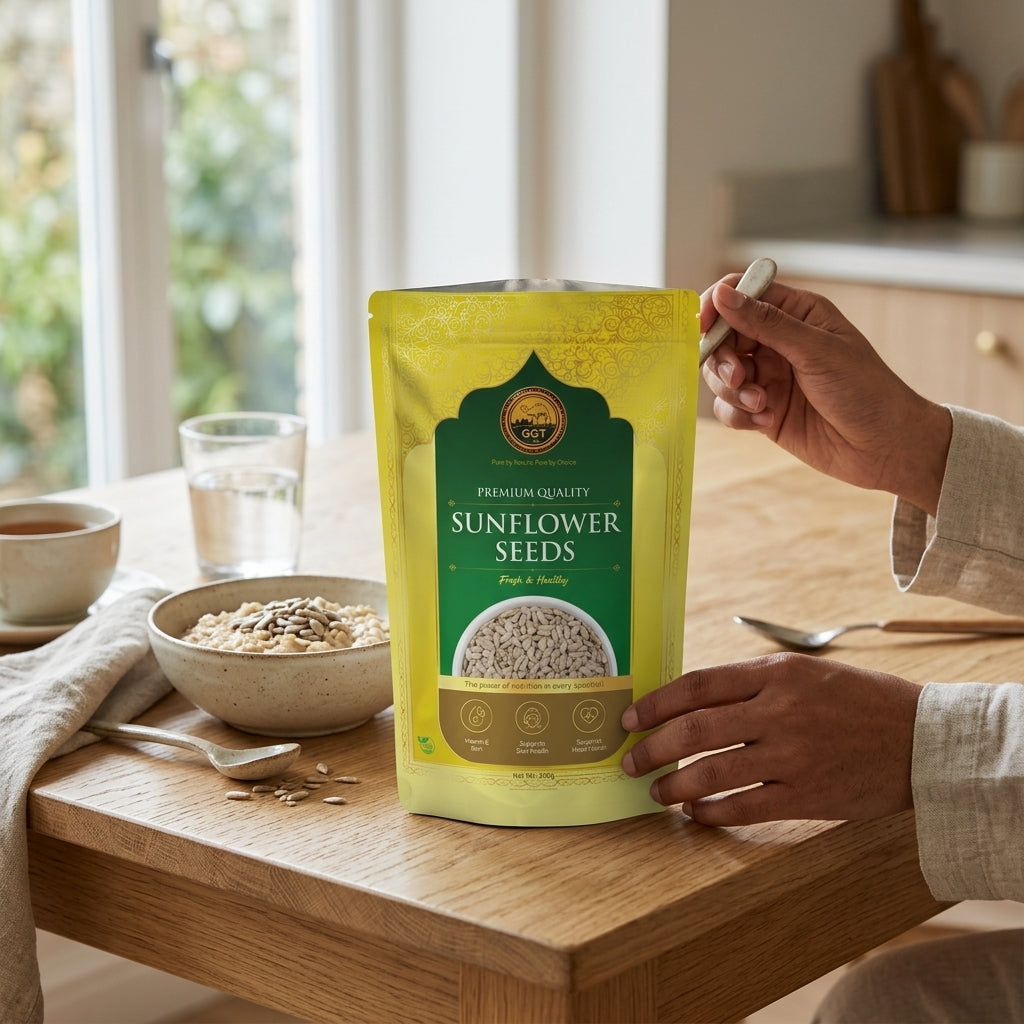
GGT Foods sunflower seeds are raw, shelled, and clean. No oil, no salt, no preservatives, no added coating of any kind. A single 30g handful covers over 70 percent of your daily Vitamin E requirement and 25 percent of your daily magnesium need. Eat them raw, add to oats, sprinkle over salads, or blend into smoothies. Every pack delivers the same consistent quality.
Nutritional Info of Our Sunflower Seeds
|
Nutrient |
Per 100g |
Per 30g Serving |
% Daily Value (30g) |
|
Calories |
584 kcal |
175 kcal |
|
|
Total Fat |
51.5g |
15.4g |
20% |
|
Saturated Fat |
4.5g |
1.3g |
7% |
|
Monounsaturated Fat |
18.5g |
5.6g |
|
|
Polyunsaturated Fat |
23.1g |
6.9g |
|
|
Carbohydrates |
20g |
6g |
2% |
|
Dietary Fiber |
8.6g |
2.6g |
9% |
|
Natural Sugars |
2.6g |
0.8g |
|
|
Protein |
20.8g |
6.2g |
12% |
|
Vitamin E |
35.17mg |
10.5mg |
70% |
|
Magnesium |
325mg |
97mg |
25% |
|
Phosphorus |
660mg |
198mg |
16% |
|
Iron |
5.25mg |
1.6mg |
9% |
|
Zinc |
5mg |
1.5mg |
14% |
|
Copper |
1.8mg |
0.54mg |
60% |
|
Selenium |
53mcg |
15.9mcg |
29% |
|
Potassium |
645mg |
193mg |
4% |
|
Vitamin B6 |
1.35mg |
0.4mg |
24% |
|
Folate |
227mcg |
68mcg |
17% |
Source: USDA FoodData Central, Seeds, sunflower seed kernels, dried. FDC ID: 170562 https://fdc.nal.usda.gov/food-details/170562/nutrients
Why Choose GGT Organic Sunflower Seeds
- Direct farm sourcing: GGT Foods works directly with sunflower farms, cutting out middlemen that add handling time and storage gaps between harvest and delivery. We know the harvest date of every batch before packing begins.
- Raw and unprocessed from start to finish: Seeds are shelled and cleaned without heat treatment, chemical processing, or oil application at any stage. Nutritional content at the point of packaging matches nutritional content at harvest.
- Batch-level quality screening: Before any batch gets packed, it goes through moisture testing, visual checks for mold and discolouration, and contamination screening. Batches that do not clear every check are rejected, not quietly mixed into other lots or sold at a lower price.
- Temperature-controlled storage and packing: Sunflower seeds are high in unsaturated fat and go rancid faster than most buyers expect in warm, humid conditions. GGT Foods stores and packs in a cool, enclosed facility that prevents oxidation before the product reaches you.
- No additives of any kind: The ingredient list has one item. Sunflower seeds. No glucose syrup, no refined oil, no added sodium, no preservatives.
- 200g pack for freshness: Larger packs opened and partially used over weeks expose high-fat seeds to oxidation. The 200g format covers one to two weeks of daily use, keeping seeds fresh through the last handful.
- Best sunflower seeds price in India: GGT Foods sunflower seeds price reflects direct sourcing and fair margins. No premium markup for branding or unnecessary packaging.
Health Benefits of Sunflower Seeds
Sunflower seeds are one of the few whole foods where a single 30g serving meaningfully covers six distinct health areas at once. The numbers behind each benefit below come directly from USDA-verified nutrient data, not marketing claims. What sunflower seeds do for the body is a straightforward result of what they contain.
Heart Health
The fat in sunflower seeds is predominantly unsaturated. Linoleic acid, a polyunsaturated omega-6 fat, makes up over 50 percent of total fat content. Oleic acid, a monounsaturated fat, covers a significant additional share. Both fats are consistently linked to reduced LDL cholesterol and improved HDL levels in cardiovascular research.
A review in the American Journal of Clinical Nutrition found that replacing saturated fat with linoleic acid reduced coronary heart disease risk measurably across multiple study populations. A 30g daily serving of raw sunflower seeds is a practical, clean way to shift the daily fat profile toward heart-protective unsaturated sources.
Skin and Hair Health
Sunflower seeds have 35.17mg of Vitamin E per 100g, which covers 234 percent of the daily requirement from one source alone. Vitamin E builds up in skin cell membranes and blocks UV-driven oxidative damage. It also keeps collagen fibers structurally intact, which maintains skin firmness over years of daily intake.
Zinc at 5mg per 100g controls sebum production on the scalp. Too much or too little sebum is the root cause of most dandruff and dry scalp issues. Copper at 1.8mg per 100g drives melanin synthesis, the pigment responsible for skin tone and hair colour. People dealing with premature greying or uneven skin tone often have low copper intake without realising it. One 30g serving of sunflower seeds covers all three gaps.
Bone Strength
Magnesium at 325mg per 100g does two things for bone health. It pulls calcium into bone tissue rather than letting it deposit in arteries, and it triggers the enzymes that build the bone matrix itself. Calcium supplements taken without adequate magnesium deliver a fraction of their intended benefit for this reason.
Phosphorus at 660mg per 100g reinforces bone mineral density alongside calcium and magnesium. Selenium at 53mcg per 100g reduces inflammation in the connective tissue surrounding joints, which matters for anyone with early arthritis or recurring joint pain.
Blood Sugar Management
With a glycemic index of around 20, sunflower seeds produce very little blood sugar response after eating. Fat and fiber in the seeds slow glucose absorption through the digestive tract. Chlorogenic acid, a naturally occurring compound in sunflower seeds, adds another mechanism by slowing glucose release from liver glycogen after meals. Research on type 2 diabetic patients found measurable reductions in fasting blood glucose after regular sunflower seed consumption over several weeks. A 30g serving with a meal is a safe, low-GI daily addition for anyone managing blood sugar.
Protein and Muscle Support
Sunflower seeds deliver 20.8g of protein per 100g. The amino acid profile is rich in arginine, which the body converts to nitric oxide. Nitric oxide widens blood vessels and improves blood flow to muscle tissue during and after training. For vegetarians and vegans tracking protein intake, 30g of sunflower seeds daily adds over 6g of plant protein with no processing, no additives, and no flavoring.
Stress and Sleep
Magnesium at 325mg per 100g activates the parasympathetic nervous system and helps regulate cortisol. Magnesium deficiency is one of the most common and underdiagnosed nutritional gaps in Indian adults under sustained stress.
Sunflower seeds also carry tryptophan, an amino acid precursor to serotonin and melatonin. A 30g serving in the evening alongside a small carbohydrate source supports tryptophan uptake across the blood-brain barrier and helps with sleep onset and mood stability.
How to Consume Sunflower Seeds Daily
You should consume around 30g of sunflower seeds per day, roughly three to four tablespoons. Raw is the most nutritionally complete option since heat degrades Vitamin E and live enzymes. That said, sunflower seeds work across most meals and snack formats without any strong flavour getting in the way. The methods below are practical, require no equipment, and take under two minutes each.
Raw as a Daily Snack
Eat 30g raw, straight from the pack, as a mid-morning or afternoon snack. Raw consumption preserves Vitamin E content and live enzymes that heat degrades. No prep needed.
Soaked for Better Absorption
Soak 30g in water for four to six hours. Soaking reduces phytic acid, a compound that binds minerals and limits absorption. Soaked sunflower seeds deliver more bioavailable magnesium, zinc, and iron than dry seeds. Rinse, drain, and eat as-is or add to a breakfast bowl.
On Salads, Dal, and Rice Dishes
Scatter one tablespoon over a green salad, bowl of dal, or curd rice. Sunflower seeds have a neutral taste that adds crunch and protein to most savory dishes without changing the flavor.
In Smoothies and Breakfast Bowls
Blend one tablespoon into a banana or mango smoothie for a protein and Vitamin E boost. Sprinkle over yogurt with sliced fruit and a few raisins for a balanced breakfast covering protein, fiber, healthy fat, and natural sugar.
In Granola and Baked Goods
Mix into homemade granola bars, oat ladoos, and banana muffins. Combine with pumpkin seeds, flaxseeds, and oats for a trail mix that works as a travel snack, pre-workout fuel, or school tiffin addition.
Best Times to Eat Sunflower Seeds:
- Morning: Raw or soaked with breakfast for steady energy through the day
- Pre-workout: Thirty minutes before training for sustained fat-based energy
- Evening: With a small carb source to support serotonin production and sleep quality
FAQs on Sunflower Seeds
What is the use of sunflower seeds?
Eaten raw or added to salads, smoothies, oats, and baked goods as a daily source of Vitamin E, protein, and healthy fat.
How many sunflower seeds to eat daily?
30g per day, about three to four tablespoons, covers the full benefit range without overshooting daily omega-6 or calorie targets.
What are the benefits of eating sunflower seeds?
Heart protection, skin and hair health, bone strength, blood sugar stability, stress reduction, and plant protein, all from one seed.
Do sunflower seeds have protein?
Yes. 20.8g per 100g, making them one of the stronger plant protein sources available at this price point in India.
Can diabetics eat sunflower seeds?
Yes. With a glycemic index of around 20 and high fiber content, a 30g serving alongside a meal is a safe daily choice for most diabetics.
USP
Benefits
Shipping & Returns
Orders are processed within 1-3 business days, with estimated delivery taking 4-7 business days. Once shipped, tracking details will be shared via email. If you need to return an item, please ensure it’s unused and initiate the process within 7 days. Refunds will be issued to the original payment method within 7-10 business days after inspection. For more details, contact our customer service.


